
What Makes Well Water Different on Delmarva
Four things worth knowing before anyone sells you equipment.
-
Water Here Comes Out of the Ground Acidic
The sands of the Atlantic Coastal Plain hold very little of the limestone that buffers groundwater elsewhere, so water moving through them stays acidic and low in alkalinity. The USGS regional assessment of this aquifer system reported a median pH of 5.3, in a sample that was about 46 percent domestic wells. That is the condition behind blue-green staining on a sink, pinhole leaks in copper, and metal picked up from your own plumbing on the way to the tap.
-
Maryland Tests Your Well Twice. Delaware Never Tests It.
Maryland requires a water quality test when a well is approved and, since October 2024, again every time the property is sold. Delaware requires a permit and a licensed driller, requires the well to be disinfected, and requires no water quality test on a domestic well at all. Two states, one peninsula, opposite rules, and neither one asks you to retest the water you drink in between.
-
The Nitrate Warning Is the One That Checks Out
Most of what people assume about local well water turns out to be wrong. Nitrate is the exception. In a Delaware Geological Survey study of 209 shallow domestic and small-supply wells, nitrate was detected in 76 percent of them and exceeded the federal limit in 18 percent. A University of Maryland project that tested 127 private wells in Somerset, Wicomico and Worcester counties found roughly a fifth above the level it used to trigger follow-up testing.
-
Salisbury Treats Its Wells. Yours Is Untreated.
Salisbury draws from the same shallow Coastal Plain aquifer that feeds wells around it, and before that water reaches a customer the city runs it through aeration, filtration, iron removal and corrosion control. A private well a few miles away gets none of those steps. The water starts out the same. What happens to it next is the entire difference.
Local Resources
Delmarva Well Water
Acidic Water and What It Does to Your Plumbing
Rainwater falling on Delmarva soaks through quartz sand that has almost no carbonate in it to neutralize acidity. The water that reaches your well is soft, low in alkalinity and acidic, and acidic water is chemically hungry. It dissolves a little of whatever it touches on the way to your tap, which on most properties means copper pipe, brass fittings and solder.
A USGS study of more than 8,300 domestic wells nationwide found Maryland, New Jersey and Delaware to be the three states with the greatest percentage of wells producing potentially corrosive groundwater. The regional assessment of this aquifer system put the median pH at 5.3, in a sample that was about 46 percent domestic wells. Neither figure is a measurement of your particular well, and that is the point of testing one.
What it looks like in a house: blue-green stains in sinks and tubs, pinhole leaks in copper lines, a metallic taste, and lead or copper showing up in a first-draw sample even though neither is in the aquifer. The fix is not a softener. It is an acid neutralizing filter that raises pH before the water reaches your plumbing, which is a different piece of equipment sized from a pH and alkalinity reading.
Nitrate, Farmland and Shallow Wells
Delmarva grows a great deal of corn, soybeans and poultry, and nitrogen that is not taken up by a crop moves down into the shallow water table. Wells finished in that shallow unconfined aquifer are the ones at risk. Deeper wells in the confined aquifers below it usually are not.
The Delaware Geological Survey compiled results from 209 shallow domestic and small-supply wells and found nitrate in 76 percent of them, with 18 percent over the 10 mg/L federal limit. On the Maryland side, a University of Maryland School of Public Health project tested 127 private wells in Somerset, Wicomico and Worcester counties and reported that close to a fifth came back at levels its researchers flagged for health follow-up. Those two studies use different thresholds and are not directly comparable, but they point the same direction.
One caution about numbers you may see quoted elsewhere. The USGS also runs a network of shallow monitoring wells on Delaware farmland, drilled specifically to catch young water under changing land use, and that network reports much higher nitrate than household wells do. Those are not domestic wells and the figures should not be read as what a homeowner should expect.
Nitrate has no taste, no color and no smell, and boiling concentrates it rather than removing it. It matters most for pregnant women and infants under six months. Treatment is either reverse osmosis at the tap or anion exchange for the whole house, and which one makes sense depends on your number.
PFAS, and the Free Test Delaware Will Pay For
Delaware has taken PFAS seriously and has spent real money on it. Through DNREC and the Division of Public Health, any Delaware resident on a private well can have their water tested free for PFAS and a range of other contaminants. There is no charge for sampling or for the lab work. You submit a request form, and the state says an agency staff member or its sampling contractor will contact you within two weeks to schedule. If PFAS turns up, the state may cover filtration and maintenance for a year, with additional help toward installation for qualifying households. Sharp Water has more on that program here.
That program is Delaware only. If you are in Salisbury, Cambridge, Easton, Elkton, Princess Anne or St. Michaels, you are not eligible for it, and testing is on you.
On known sources: DNREC reports that PFAS was found in groundwater at Dover Air Force Base in 2014, and that in 2019 four private wells nearby, serving five businesses, two homes and one office building, came back above the federal advisory in force at the time. The Air Force supplied bottled water and then installed filtration. Similar firefighting-foam sources have been identified at Blades and Little Creek and in New Castle County. These are specific locations rather than a peninsula-wide problem, and a test is what separates the two for your address.
PFAS does not come out with a softener or a sediment filter. It takes activated carbon, ion exchange or reverse osmosis, either at the whole house or at the tap.
TREATMENT OPTIONS
Built Around Your Numbers, Not a Package
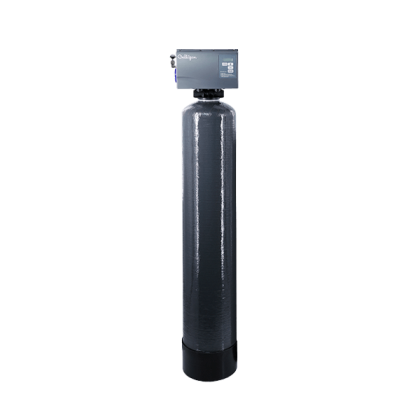
Acid Neutralizing and Iron Filtration

Water Softening
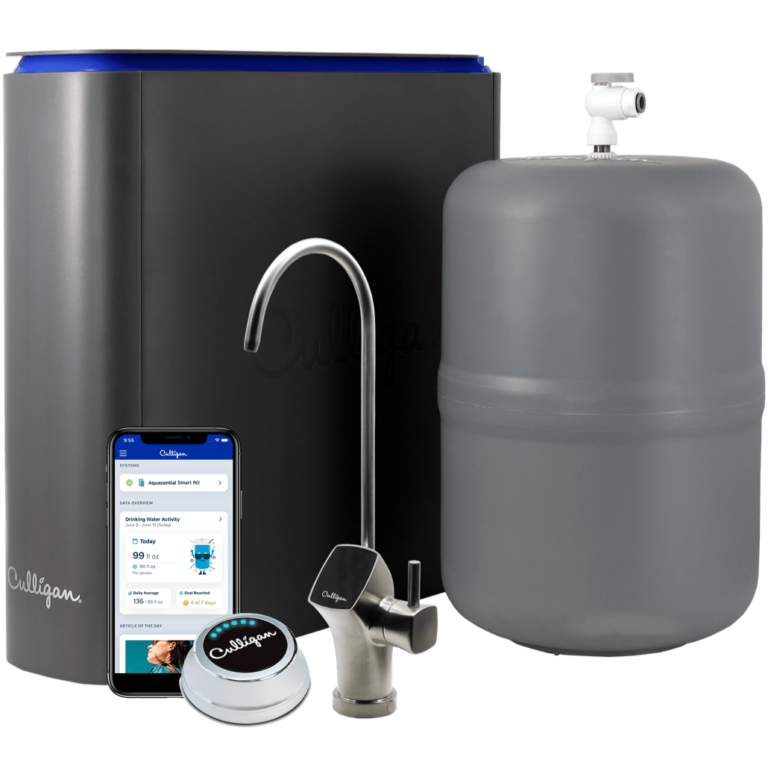
Drinking Water Systems
The Proof
Well Water Treatment Systems
I was very pleased with the recent upgraded service which included a maintenance and water analysis visit. Service provider, Brian, ran some tests, check our water, serviced our equipment, changed our water filter, and delivered salt to our tank.

I had trouble for months with the pressure in my water and no one could figure it out. But Ken from Culligan of Dover, Delaware, just left and he not only he fixed it and I’ve been so worried about it because I had to have a new well pump installed.
Best annual service I have ever had in eight years. Your service tech ,”Brian” did an outstanding job servicing our filter system and water softener. No one ever did such a thorough service on our equipment.
Blue-Green Stains? Rust? Acidic Water?
Find Out What Is Actually in Your Well
A Culligan water test is free, it happens at your house, and it takes about half an hour. You get your numbers explained in plain language and an honest answer about whether you need equipment at all.

Frequently Asked Well Water Treatment Questions
We Have Answers
How do I know if my well water is acidic?
A pH test tells you in a minute, and it is one of the first things we read. Below about 6.5 the water is aggressive toward metal plumbing. The signs show up before the test does: blue-green staining in a sink or tub, a metallic taste, or copper lines that develop pinhole leaks after a few years. If you have seen any of those, pH is the first thing to check.
Why is Coastal Plain water acidic in the first place?
Because of what it moves through. The sands under the Eastern Shore and Delaware are quartz-rich and hold very little carbonate, so there is nothing to neutralize the natural acidity rainwater picks up as it infiltrates. Water in limestone country comes out hard and alkaline for the opposite reason. Here it comes out soft and acidic.
Will a water softener fix acidic water?
No, and this is the most common mistake we see. A softener exchanges calcium and magnesium for sodium. It does not raise pH and it will not stop your water from dissolving copper. Acidic water needs a neutralizing filter, which is a separate piece of equipment that adds alkalinity back before the water reaches your plumbing.
Where are the blue-green stains coming from if there is no copper in my water?
From your own pipes. Acidic, low-alkalinity water dissolves a little copper from the lines as it sits overnight, and that dissolved copper leaves the blue-green mark when the water evaporates in a sink or tub. The same process can pull lead out of older solder joints and brass fittings. A first-draw sample in the morning is the one that shows it.
Should I be worried about nitrate?
It depends on how deep your well is and what is around it. In a Delaware Geological Survey study of 209 shallow domestic and small-supply wells, 18 percent were over the federal limit, and shallow wells in farm country are where that risk sits. Nitrate has no taste, color or smell, so the only way to know is a test. It matters most for pregnant women and infants under six months.
I am not next to a farm. Do I still need to test for nitrate?
Yes, at least once. Groundwater moves, and the shallow aquifer under much of Delmarva is recharged across a wide area rather than straight down from the field next door. Septic systems are a second source that has nothing to do with agriculture. One test settles it, and if your number is low you are unlikely to need to think about it again for years.
Does boiling the water remove nitrate?
It does the opposite. Boiling evaporates water and leaves the nitrate behind, so the concentration goes up. Nitrate comes out with reverse osmosis at the tap or anion exchange for the whole house. Nothing you do on the stove helps.
Delaware will test my well for free. Is that real?
It is. DNREC and the Division of Public Health offer free testing to Delaware private well owners for PFAS and a range of other contaminants, with no charge for sampling or lab work, and the state says it will contact you within about two weeks of your request to schedule. If PFAS is found, the state may cover filtration and maintenance for a year. It is a good program and worth using. There is more about it here.
I live in Maryland. Can I use that program?
No. The free testing is a Delaware program for Delaware residents. If you are in Salisbury, Cambridge, Easton, Elkton, Princess Anne or St. Michaels, it does not cover you. Our in-home water test is free either way, and it covers the treatment-relevant numbers the state programs do not look at.
How bad is the PFAS situation around Dover Air Force Base?
It is real and it is specific. DNREC reports PFAS was detected in groundwater on the base in 2014, and that in 2019 four private wells nearby, serving five businesses, two homes and one office building, exceeded the federal advisory then in effect. The Air Force provided bottled water and later installed filtration. That is a defined set of properties rather than a region-wide problem, and a test is how you find out which side of it you are on.
I am selling my house in Maryland. Do I have to test the well?
Under the Maryland Private Well Safety Act of 2023, which took effect October 1, 2024, a contract for the sale of property with a private well has to include a provision requiring water quality testing. The minimum analytes are bacteria, nitrate and turbidity, the work has to be done by a state-approved sampler and lab, and results stay valid for three years. Rental properties have to be tested every three years with the results disclosed to tenants. The state may add more analytes by the end of 2026.
Does Delaware require a test when I sell?
No. Delaware requires a construction permit, a licensed contractor and disinfection of the finished well. Its regulations reserve the bacteriological sample for public wells. Its regulations require the finished well to be disinfected and reserve the follow-up bacteriological sample for public wells. A domestic well, which the state defines as one serving no more than three dwellings, has no required water quality test attached to it.
How often should I test my well?
Once a year for bacteria and nitrate is the common recommendation, and those are the two that can change without warning. pH, alkalinity, iron, hardness and manganese change slowly, so every few years is reasonable unless something about the water changes. Retest any time the taste, smell or color shifts, or after work is done on the well.
My water smells like rotten eggs. What is that?
Hydrogen sulfide gas, produced by bacteria that reduce sulfate in oxygen-poor groundwater. Neither Maryland nor Delaware publishes a figure for how many private wells have it, so we will not pretend to know how common it is here. What we can say is that the strength of the smell is not a reliable guide to how much is present, and that a water heater can produce the same odor for an unrelated reason, which a test tells apart.
I get orange staining on everything. Is that iron?
Almost always. Iron is the most widespread constituent above its secondary standard across this aquifer system, and Salisbury runs a dedicated iron removal step on its own municipal wells for exactly this reason. Manganese causes a darker brown or black version of the same problem. The two are treated differently, so it is worth knowing which one you have.
Is my well water hard?
Less often than people assume. Coastal Plain groundwater is naturally low in calcium and magnesium, which is the same chemistry that makes it acidic. Some wells here are genuinely hard and some are very soft, and there is no published average for private wells on Delmarva that we would stand behind. That makes a hardness reading worth taking rather than guessing at.
My neighbor is on city water and says theirs is fine. Does that tell me anything?
Not much, and in Dover it tells you less than you would think. Dover is entirely on groundwater, and six of its twenty-one wells sit in the same unconfined aquifer that shallow domestic wells tap. The difference is not the source. It is that the city treats, tests and reports on its water continuously and nobody does that for yours.
Could there be radium in my well?
The Maryland Geological Survey notes that radium can be elevated in the Eastern Shore surficial aquifer, because the same low pH that makes this water corrosive also helps release radium from quartz sands. That is a mechanism, not a measurement, and no agency publishes a prevalence figure for private wells here. We are not going to tell you it is likely or unlikely. If it concerns you, it is a specific lab test and worth running once.
What about arsenic?
We could not find a study of arsenic in Maryland or Delaware Coastal Plain domestic wells that would let us say anything honest about how common it is here. It has been detected in one of the deeper regional aquifers in public-supply monitoring. If you want to know about your well, it is a test, and we would rather say that than quote you a number from somewhere else.
My water tastes salty in late summer. What causes that?
DNREC identifies this as a real issue for Delaware well owners, noting that homeowners with wells near saltwater bodies may notice a salty taste in the hotter, drier months when the water table is at its lowest. The state also makes a point worth repeating: saltwater cannot be removed by the typical water softener. Reverse osmosis is the household answer, and a chloride test confirms what you are dealing with.
Where should I get started?
With a test, because every recommendation after that depends on it. The test is free, it happens at your house, it takes about half an hour, and you get your numbers explained in plain language. If your water does not need treatment we will tell you that.
Facebook